







Jump To
The question comes up in almost every kitchen conversation we have with Hudson Valley homeowners. The cabinets look outdated for example: maybe the doors are warped, maybe the finish is peeling, maybe they just look like they belong in a different decade. And the homeowner wants to know: do I reface what’s there, or do I pull everything out and start fresh?
Every contractor blog on the internet has a post about this. Most of them walk through the pros and cons of each option and land on something like “it really depends on your situation.” Which is true but completely unhelpful at the same time. By the end of this guide, you shouldn’t need to wonder which category you’re in. We’ll walk you through the specific things to check and the specific questions to ask, so you can walk into a contractor conversation knowing what you actually need.
Before anything else, here’s what refacing actually means in plain terms: you keep your existing cabinet boxes in place and replace everything visible such as the doors, drawer fronts, hardware, and a veneer applied to the exposed box surfaces. The result, to anyone standing in your kitchen, looks like entirely new cabinets. What it doesn’t change is the layout, the storage configuration, or anything happening inside the boxes. That distinction matters a lot, and we’ll come back to it.
What refacing cabinets actually involves
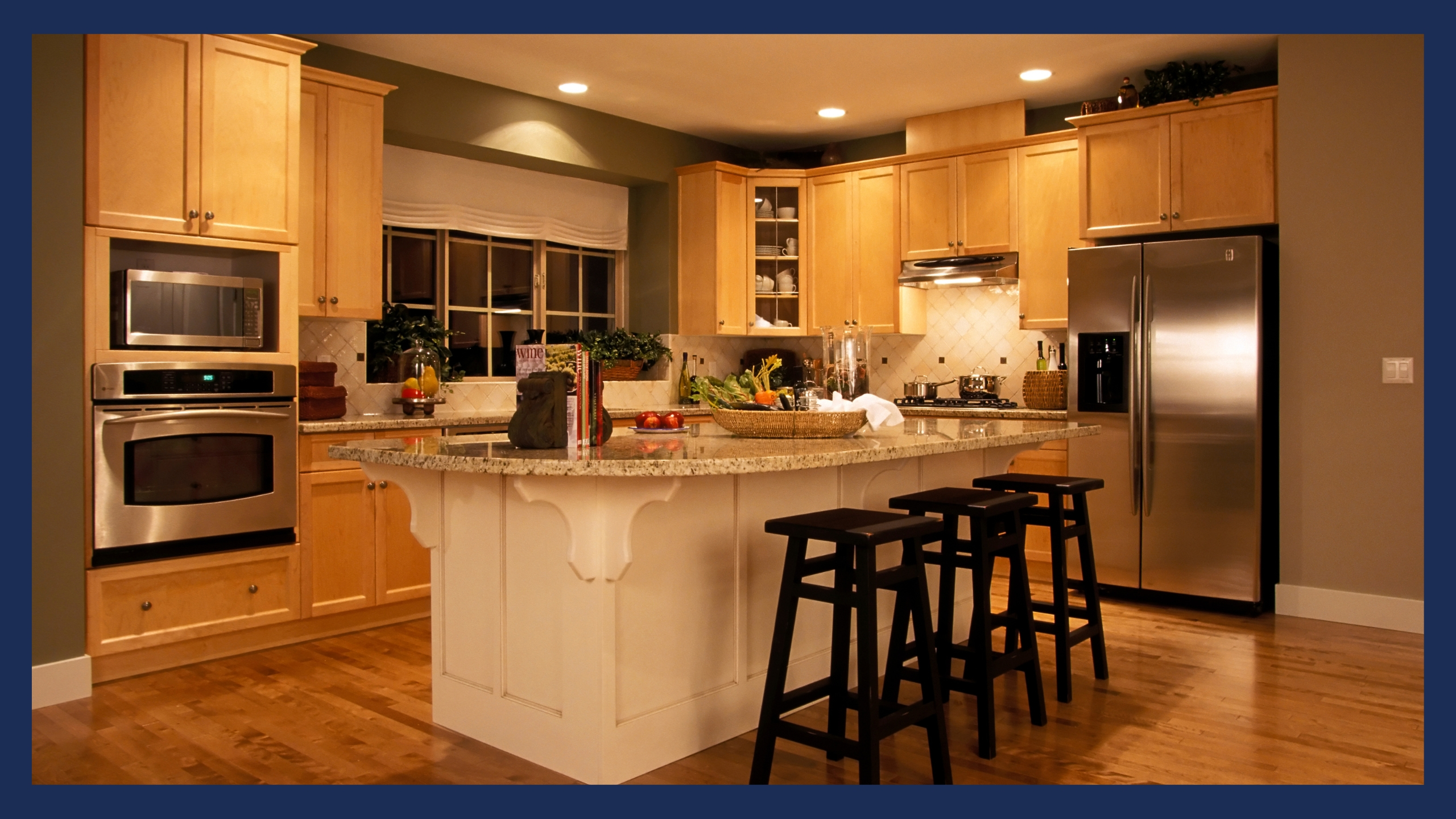
Refacing is often described as a ‘facelift’ for your cabinets, which is accurate as far as it goes. The cabinet frames and boxes stay exactly where they are. Everything you see including the door faces, drawer fronts, hardware, and the thin veneer applied to the visible sides and front frames of the boxes gets replaced with new material.
The practical result is that your kitchen looks like it has new cabinets without the cost, timeline, or disruption of actually replacing them. A typical refacing job in Hudson Valley takes two to five days and your kitchen stays largely functional throughout. A full cabinet replacement, by comparison, runs two to four weeks minimum and involves living without a working kitchen for most of that time.
What you can change with refacing
- Door style: shaker, flat panel, raised panel, beadboard
- Door and drawer front material: wood, thermofoil, rigid thermofoil, laminate
- Hardware: pulls, knobs, hinges
- Veneer color and finish on the box exteriors
What you cannot change with refacing
- Cabinet box location: everything stays exactly where it is
- Cabinet height, depth, or width
- Storage configuration: same number of shelves, same drawer depth
- Interior condition: any damage inside the boxes stays
That last point is the most important one in the whole conversation, and it’s where we’ll start.
Step 1: Check Your Cabinet Boxes — This Determines Everything
Refacing only makes sense if the boxes it’s built on are structurally sound. A beautiful new door on a deteriorating box is a short-term cosmetic fix that will cost you more in the long run. This is the check that competing posts skip. They mention that box condition matters, but none of them tell you how to assess it yourself before you call anyone.
Here’s what to look for. You don’t need any tools. Give yourself twenty minutes and go through every cabinet in the kitchen.
Push test on interior walls
Open every cabinet door and press firmly on the interior side walls and back panel. Solid wood or plywood boxes won’t flex. If you feel any give, softness, or sponginess, that’s moisture damage. Even if the surface looks intact, the structural integrity is compromised and veneer applied over it won’t hold long-term.
Under-sink cabinet — check this one twice
In our experience, the under-sink base cabinet is the single most common failure point in Hudson Valley kitchens. Slow leaks, condensation from pipes, and decades of humidity build up there first. Pull everything out and look at the floor of that cabinet and the side walls. Soft spots, staining, swelling, or a floor that gives when you press it means water has been sitting in that space. This is the cabinet we replace most often even in kitchens that are otherwise in good shape.
Drawer boxes — pull them fully out
Pull each drawer all the way out and look at the drawer box itself, not the front, but the actual box that holds the contents. Look for warping, swelling at the joints, separating corners, or a bottom panel that’s bowing. This kind of deterioration isn’t visible with the drawer closed. If the drawer boxes are compromised, refacing the fronts addresses only the cosmetic surface while leaving the functional problem in place.
Hinge points and face frames
Look at the wood around the hinge screw holes on both the door and the face frame. If the wood is crumbling, if screws turn without catching, or if the face frame itself is soft at those points, the frame is deteriorating. This is less common than moisture damage but important to catch because hinges that won’t hold properly on new doors means the refacing fails functionally regardless of how it looks.
The smell test
It sounds basic, but it works. A persistent musty smell inside the cabinets even without visible damage indicates a moisture history that may not be fully apparent on the surface. Mold and mildew inside cabinet boxes is a health concern as much as a structural one. If you’re smelling it, someone needs to open those boxes up properly before you reface over the problem.
What your box assessment tells you
If you went through that check and everything passed such as no flex, no water damage under the sink, solid drawer boxes, hinge points intact, no musty smell which means that your boxes are good candidates for refacing. If two or more of those issues were present, you’re likely looking at replacement, or at minimum a hybrid approach where the damaged sections are replaced while sound sections are refaced. We’ll cover that below.
Step 2: Ask Yourself Honestly if the Layout is Working
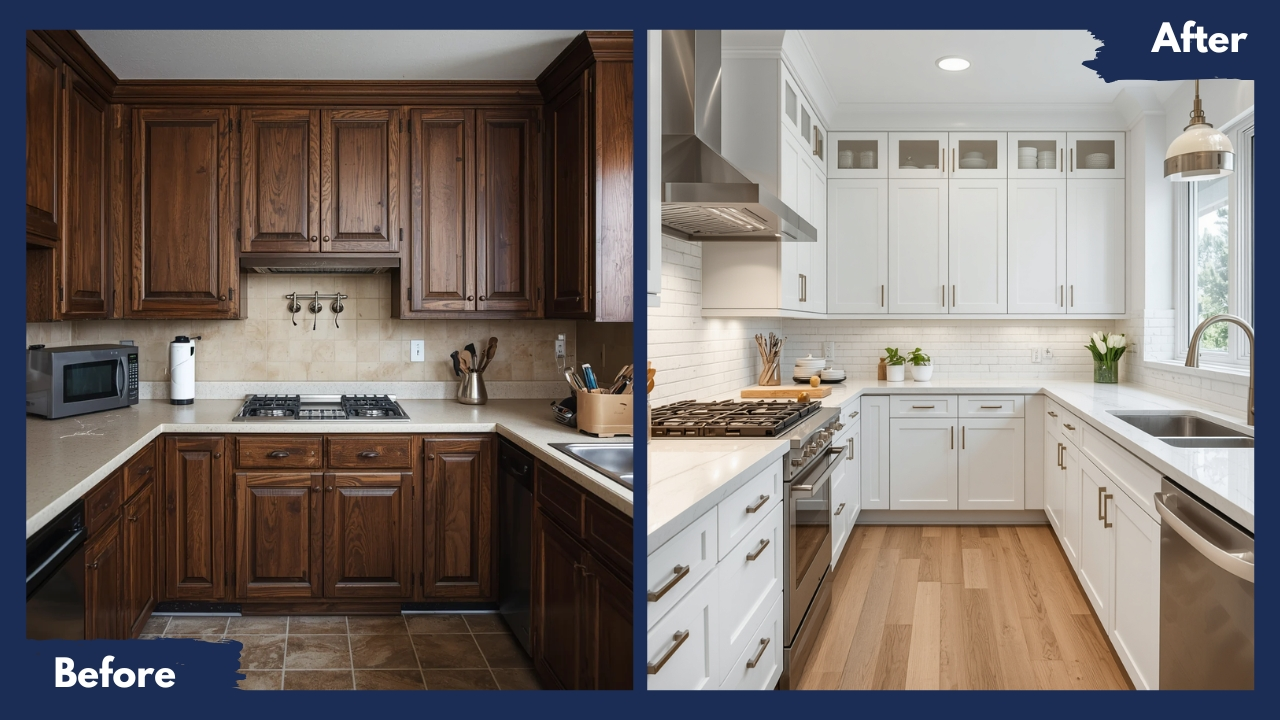
Assuming your boxes passed the check above, the second question is the one that most homeowners underestimate: are you actually happy with where everything is?
Refacing is entirely locked to your existing layout. Every cabinet stays exactly where it is, at the same height, same depth, same position on the wall. The workflow of your kitchen where you prep, where you store things, how the space functions will be identical after refacing. That’s fine if the layout works for you. It’s a significant limitation if it doesn’t.
Situations where refacing won’t solve the real problem
- You want to move or remove an island or peninsula
- Your upper cabinets don’t reach the ceiling and you want to gain that storage
- You’re replacing a refrigerator or range with a different size and the existing cabinets won’t accommodate it
- Storage is not just cluttered but genuinely insufficient, but structurally not enough for how you use the kitchen
- You want to open the kitchen to another room, which requires moving cabinets off a wall
If any of those apply, refacing will leave the underlying problem unsolved regardless of how good it looks. You’ll have a kitchen that looks updated but still doesn’t work the way you want it to.
Situations where the layout question is already answered
On the other hand, if your kitchen functions well and if the workflow makes sense, storage is adequate, appliances fit, and your main frustration is how it looks rather than how it works. Refacing delivers the visual update without touching any of that.
What Each Option Actually Costs and Why the Numbers Vary So Much
One of the most confusing parts of researching this decision is that you’ll find wildly different cost figures depending on where you look. Part of that is regional variation. Part of it is that nobody explains what actually drives a project toward the top or bottom of those ranges. Here’s the honest breakdown for Hudson Valley homeowners.
Cabinet refacing costs
For a typical Hudson Valley kitchen, let’s say 15–20 cabinet doors and drawer fronts the professional refacing runs roughly $5,000–$11,000. What pushes it toward the higher end:
- Real wood doors vs. thermofoil: wood costs more and is generally worth it for longevity in this climate
- Number of cabinets and drawer fronts: larger kitchens cost proportionally more
- Veneer material and finish complexity
- Any base cabinet repairs needed alongside the refacing
What pushes it toward the lower end: smaller kitchens, simpler door profiles, thermofoil or laminate over wood doors.
Full cabinet replacement costs
Full replacement in Hudson Valley runs $18,000–$45,000+ for most kitchens. That range reflects:
- Stock cabinets (least expensive, limited sizing options) vs. semi-custom (most common) vs. custom (most expensive, fully tailored)
- Layout complexity: a straightforward galley kitchen costs less than an L-shape with an island
- Demo and disposal: pulling out existing cabinets and removing them adds time and cost
- Countertop replacement: almost always required with full cabinet replacement since the new cabinets won’t match existing countertop dimensions
- Older Hudson Valley homes sometimes require additional wall prep, leveling, or structural work that adds to the total
The savings gap and what to do with it
Refacing typically saves 40–60% compared to full replacement. On a $30,000 replacement project, that’s $12,000–$18,000 back in your budget. That freed-up money can fund new countertops, updated appliances, new flooring, or lighting upgrades. All the things that change the full kitchen experience rather than just the cabinet faces.
One thing worth saying directly: some posts claim refacing and full replacement cost “nearly the same” with professional installation. In our experience across Hudson Valley kitchens, that’s not accurate. Replacement almost always costs significantly more. The question isn’t which costs less, it’s whether the additional investment in replacement is warranted by the condition of your boxes or the goals you have for the layout.
The Hybrid Option: Reface Most, Replace Where You Need To
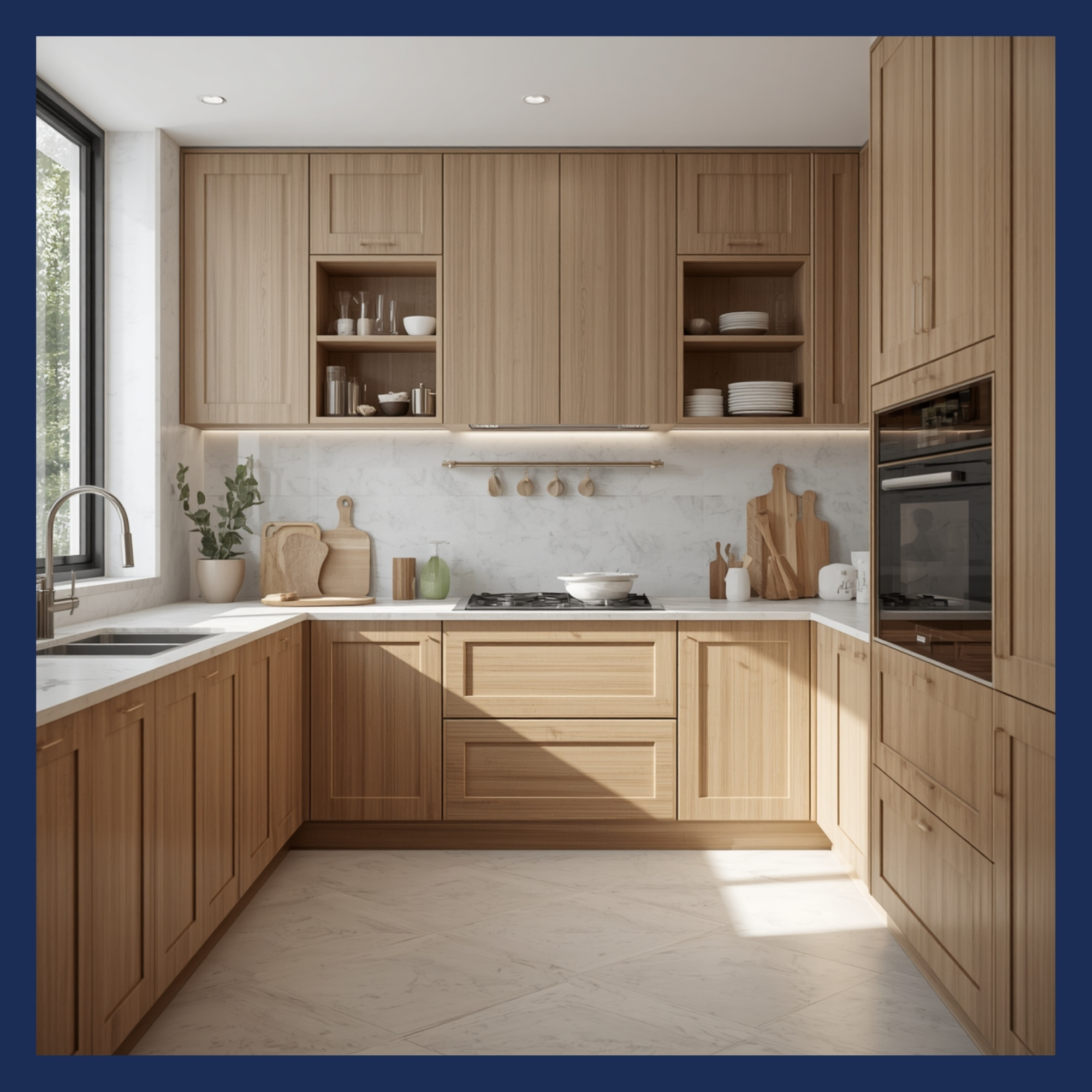
This is the option that rarely gets a proper explanation anywhere online and it’s the one that applies to a meaningful number of real kitchens. A hybrid project means refacing the majority of your cabinets while replacing specific sections that are damaged or where a layout change is needed.
Here’s what that looks like in practice. At Keen Improvements, we work with homeowners across the Hudson Valley to determine whether refacing, replacement, or a hybrid approach makes the most sense for their kitchen. worked with a homeowner in Rhinebeck last year whose kitchen was 22 years old. The upper cabinets and most of the lower run were solid good plywood boxes, no moisture damage, well-built. But the under-sink base cabinet had years of water damage from a slow supply line leak, and she wanted to add a small cabinet section to a previously open wall to gain storage. The rest of the layout worked perfectly for her. Full replacement would have cost her $28,000–$32,000. We refaced the sound cabinets, replaced the damaged under-sink section with a matching new base cabinet, and added the new section on the open wall. Total cost: just under $12,000. Her kitchen looks completely renovated. The layout problem is solved. The damaged section is gone.
That’s a hybrid project and it’s the right call more often than people realise because most kitchens don’t need everything replaced, just the parts that have actually failed.
When hybrid makes sense
- Most of the kitchen passes the box assessment above, but one or two sections have water damage
- You’re happy with 90% of the layout but want to add a cabinet section or reconfigure one specific area
- One run of cabinets is significantly worse than the rest because mostly the cabinets adjacent to the dishwasher or under the sink
The matching challenge
The practical complexity in a hybrid project is matching the new cabinet boxes to the refaced doors and veneer. New boxes need to be sized correctly and the door style and finish needs to be sourced to match what’s going on the refaced sections. This isn’t difficult if you’re working with a contractor who has done it before and has access to the right suppliers. It’s a problem if your contractor has only done pure refacing or pure replacement and hasn’t navigated the middle ground. It’s worth asking directly before you hire anyone.
The Short Version: Reface, Replace, or Hybrid?
If you’ve worked through the two steps above, you probably already have a strong instinct. Here’s the summary version for quick reference and to share with whoever else is making this decision with you.
| Reface | Replace | Hybrid | |
|---|---|---|---|
| Boxes are sound | Yes, required | Doesn’t matter | Mostly, some aren’t |
| Layout works | Yes, required | No or doesn’t matter | Mostly yes |
| Budget priority | High priority | Less of a constraint | Middle ground |
| Disruption tolerance | Low, 2 to 5 days | High, 2 to 4 weeks | Low to moderate |
| Typical cost range | $5,000–$11,000 | $18,000–$45,000+ | $7,000–$18,000 |
One honest caveat: this table assumes you’ve gone through the box assessment in Step 1. If you skimmed that section, go back and do it. The condition of your existing boxes is the single variable that overrides everything else in this decision.
Not Sure Which Option Fits Your Kitchen? That’s What the First Conversation is For.
The self-assessment in this post gets most homeowners to a clear instinct about which direction they're going. But the final call almost always benefits from someone standing in the kitchen with you: opening the cabinets, checking what's actually there, and giving you a straight answer based on what they see.
We've done all three: refacing, full replacement, and hybrid projects across kitchens throughout Dutchess, Ulster, Orange, and Columbia counties. We know what sound boxes look like and what compromised ones look like. We know when refacing is the right move and when it's selling a homeowner a short-term fix for a long-term problem. And we'll tell you honestly which one applies to yours.
If you've been standing in your kitchen trying to figure out which direction to go, we're happy to help you explore our kitchen remodeling services and start that conversation.
Get Your Free Estimate
Mt. Kisco
118 N Bedford Rd #100, Mt Kisco, NY 10549
(914) 410-6209
(914) 410-6209
Marlboro
63 South St, Marlboro, NY 12542
(845) 440-1010
(845) 440-1010