





Jump To
A kitchen remodel is one of the most rewarding projects you can take on, and one of the easiest to get wrong. The mistakes that hurt the most are rarely about paint colors or tile. They happen in the planning, before a single cabinet goes in, and they show up months later as regret, extra cost, or a kitchen that looks great and works poorly.
We remodel kitchens across the Hudson Valley, from Mt. Kisco and the surrounding Westchester and Putnam towns up through Ulster, Dutchess, and Orange counties. Over the years we have seen the same avoidable mistakes trip up smart homeowners again and again. Here are the ones worth knowing about before you start, along with a few that are specific to renovating in this part of New York.
Kitchen Remodel Planning Mistakes
The single most common kitchen renovation mistake is starting without a clear plan. Excitement takes over, demolition begins, and decisions get made on the fly with a contractor standing there waiting for an answer. Those rushed choices are the ones people regret.
Good kitchen remodel planning starts with how you actually use the space, not how it looks in a photo. Do you cook every day or mostly reheat? Do two people work in the kitchen at once? Where do the groceries land when you walk in from the car? Your honest answers should shape every decision that follows.
Lock in your design before the demo starts. Every choice you finalize ahead of time is one that cannot stall the project later. Deciding where the light switches go with the electrician already on site is how small delays and change orders pile up.
Kitchen Budget Mistakes

Most kitchen budget problems trace back to one error. Homeowners build the number around finishes, the cabinets and countertops they can see, and forget the rest. Labor, permits, plumbing, and electrical work make up a large share of the real cost, and leaving them out sets up a budget that was never going to hold.
The second budget mistake is skipping a contingency fund. A common industry guideline is to set aside roughly 10 to 20 percent of your project budget for surprises. If nothing unexpected turns up, that money stays in your pocket. If something does, you are ready for it.
That buffer matters more in the Hudson Valley than in most places. Once the walls open in an older home, hidden conditions tend to appear. Outdated wiring, plumbing that no longer meets current requirements, water damage that has been spreading quietly behind a cabinet. None of it is a reason to panic. It is a reason to plan for it.
One more budget trap is changing your mind mid-project. Swapping finishes or moving a wall after work has started is one of the most expensive things you can do, since it resets part of the schedule and the order list. For real numbers on what projects run in this area, our price guide breaks it down.
Layout Mistakes
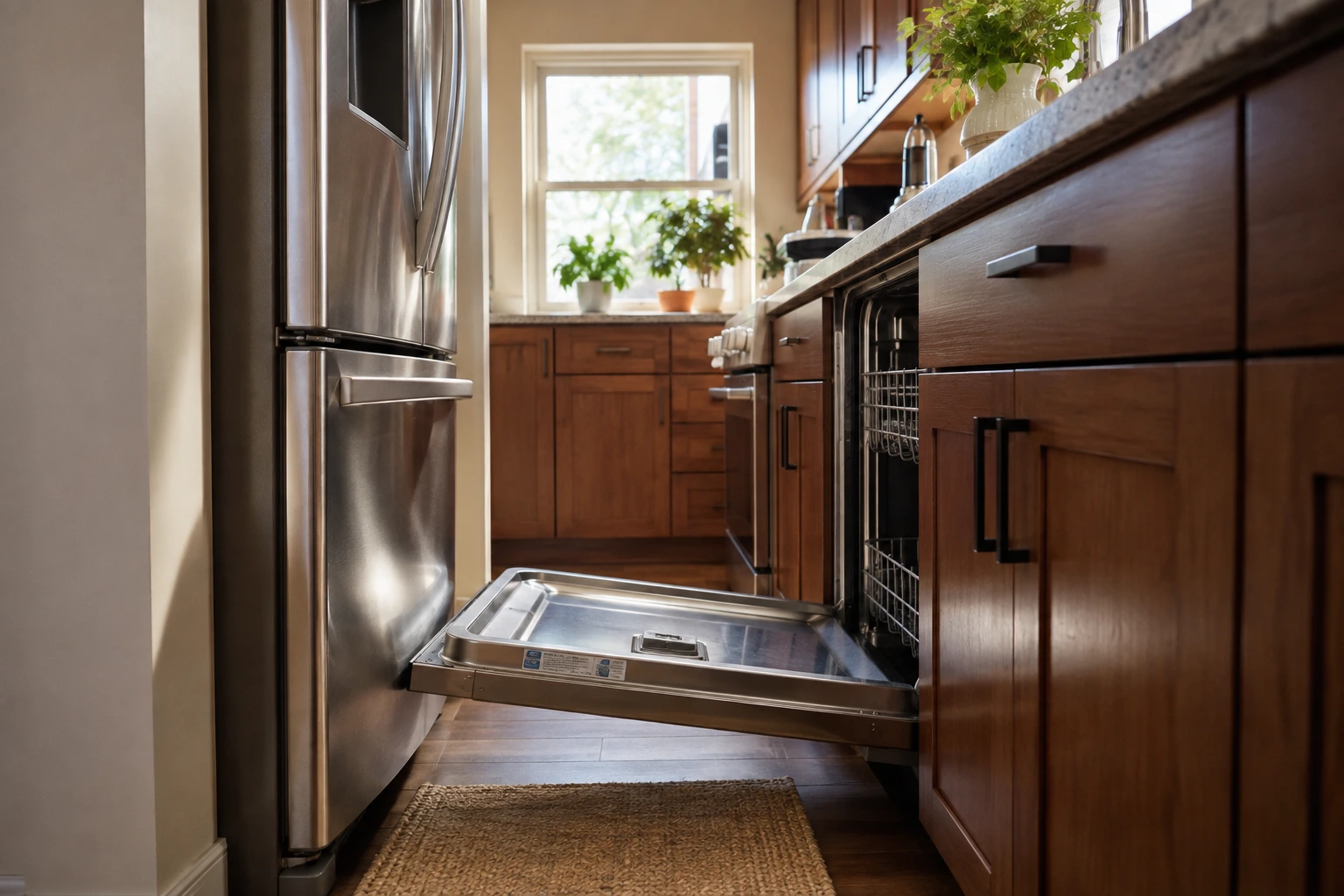
An inefficient layout can make an expensive kitchen frustrating to cook in. The classic guide here is the work triangle, the relationship between the sink, the stove, and the refrigerator. When those three points sit too far apart, or an island lands in the middle of the path between them, everyday cooking turns into a workout.
We see kitchens designed around a rendering that looks beautiful and cooks terribly. The sink ends up at one end, the range at the other, the refrigerator around a corner. Six months in, the homeowner wishes they had planned the flow first and the look second.
Clearances are the other layout mistake. Cabinet, oven, and refrigerator doors that swing into each other or block a walkway are a daily irritation. A good rule is to keep enough room between opposing doors that two people can move without a collision. Counter space gets underestimated too. Plan for where you actually prepare, serve, and set things down.
Cabinet Mistakes
Cabinets define a kitchen and eat up a large part of the budget, so cabinet mistakes are costly ones. The first is buying on price alone. Low-grade boxes and hinges wear out fast, and replacing them years early erases any savings.
Storage is the second cabinet mistake, and it hides until move-in day. People focus on the doors and the finish, then discover the pantry is too narrow for cereal boxes and the island they paid for stores nothing useful.
Before the layout is final, think through where every category of item will live. Pots, pans, baking gear, small appliances, and recycling. Deep drawers, pull-out shelves, and corner solutions turn a pretty kitchen into a functional one.
A few smaller cabinet errors cause outsized headaches. Running cabinets tight to a ceiling that is not level, so the doors will not open all the way. Ordering cabinets without telling the maker what sink you chose, so the fit is wrong. And signing off on the final cabinet order without checking it yourself. A single wrong dimension in that order can delay the whole project by weeks.
Build quality, soft-close hardware, and materials that stand up to daily use are worth the difference. We walk every homeowner through cabinet options so the choice fits the space and the budget before anything is ordered. You can see how we handle that on our kitchen remodeling page.
Lighting, Ventilation, and Electrical
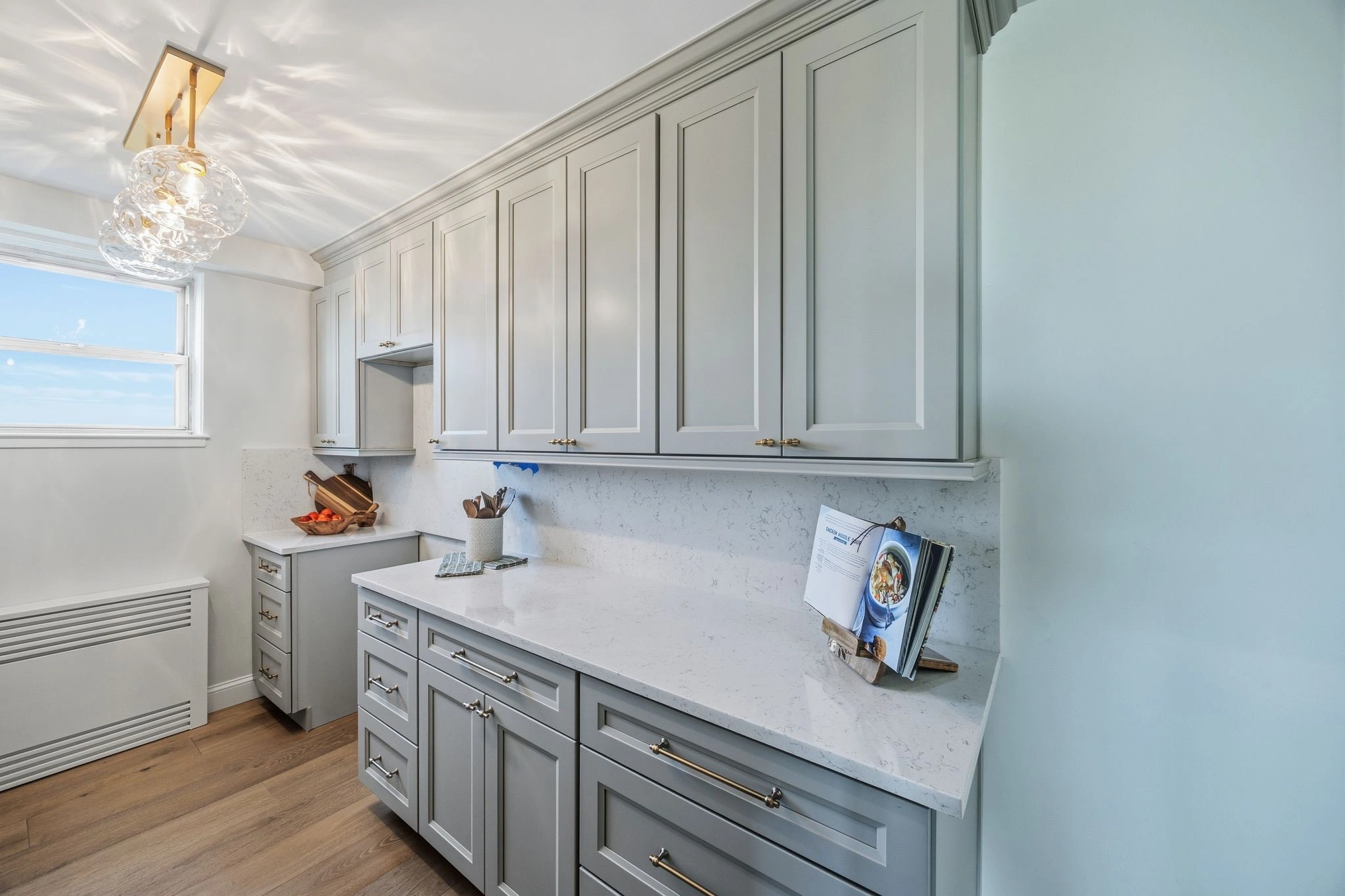
Lighting is easy to underestimate. One ceiling fixture leaves shadows exactly where you prep food. Plan for layers instead. Ambient light for the room, task light over the counters and sink, and accent light where it helps. Under-cabinet lighting is one of the cheapest upgrades with the biggest daily payoff.
Ventilation gets skipped more than it should. A range hood that only covers the back burners does little, since most cooking happens up front. A full-coverage hood that actually vents makes a real difference for grease, odor, and moisture, and it protects your new cabinets from that moisture over time.
Electrical is where older Hudson Valley homes catch people off guard. A kitchen wired in 1965 was never built for a dishwasher, a microwave, under-cabinet lighting, and a modern range all at once. The branch circuits feeding the kitchen may be undersized even when the main panel is fine. This is not a project stopper. It is something to understand early so the electrical work is part of the plan and the budget from the start, not a surprise mid-build.
Contractor Mistakes
Choosing the wrong contractor is the mistake that can undo every other good decision. And the way to avoid it is more specific here than a national guide will tell you.
Start with the lowest-bid trap. The cheapest quote is usually cheap for a reason, whether that is skipped permits, thinner materials, or corners cut on labor you will not see until later. A price that looks too good to be true almost always is. Quality work costs what it costs.
The bigger issue is licensing, and New York handles it in a way that surprises people. There is no single statewide home improvement contractor license. Licensing is done at the county level, so requirements change depending on where the work happens.
Westchester and Putnam both require home improvement contractors to hold a county license. Westchester keeps a public list of licensed contractors through its Department of Consumer Protection, along with a list of operators that consumers should avoid. This is not a formality. New York consumer protection agencies, Westchester among them, have run multi-county enforcement sweeps against unlicensed contractors, and the Attorney General has taken action against Hudson Valley operators who took large deposits and left jobs unfinished or done badly.
So before you sign, verify. Confirm the contractor holds the license your county requires, ask for proof of insurance directly, and check for complaints or judgments. It takes an afternoon and it protects the largest project most homeowners ever pay for.
The last contractor mistake is a weak contract. A one-line quote is a warning sign. A good proposal spells out the scope, the materials by brand and model, the payment schedule, and the working hours. Put everything in writing. It removes the room for misunderstanding that turns into a dispute later.
Kitchen Remodeling Mistakes Specific to the Hudson Valley
Some mistakes only make sense once you know where you are renovating. The Hudson Valley has its own set of factors that a generic checklist will never mention.
The housing stock skews old. Farmhouses, Victorians, mid-century colonials, and a large share of homes built between 1950 and 1990. That age is a gift and a catch. The bones are often wonderful, and what is behind the walls can be decades out of date. Planning for that reality, with a real contingency and a contractor who checks conditions before quoting, is what separates a smooth project from one full of surprises.
Permits are the other local variable. Review time changes from town to town across the region. Smaller towns can turn a permit around in a couple of weeks, and busier building departments take longer. A remodel that moves plumbing, adds electrical circuits, or changes walls usually needs one. Building that approval time into the schedule keeps it from becoming a delay.
Verifying a contractor depends on your county, too. In the Westchester and Putnam area around Mt. Kisco kitchen remodeling, each county runs its own consumer protection licensing. In the Ulster, Dutchess, and Orange county area, check the local requirements for where your home sits. When in doubt, your county consumer affairs office is the place to confirm a license before you sign anything.
A Quick Remodeling Checklist
Run through this before you begin.
- ✓ Finalize the full design and every finish before demolition starts.
- ✓ Build the budget around labor, permits, plumbing, and electrical, not just cabinets and counters.
- ✓ Set aside a contingency of roughly 10 to 20 percent for hidden conditions.
- ✓ Plan the layout around how you cook, using the work triangle and real door clearances.
- ✓ Map where every category of item will be stored before the cabinet order is final.
- ✓ Check the final cabinet order yourself, and confirm the sink choice with the maker.
- ✓ Plan layered lighting, a full-coverage range hood, and adequate electrical for a modern kitchen.
- ✓ Verify your contractor's county license and insurance, and get everything in a written contract.
Frequently Asked Questions
Ready to Plan Your Kitchen the Right Way?
Contact Keen Improvements for a free estimate. We remodel kitchens across the Hudson Valley and walk every homeowner through the decisions that keep a project on budget and on schedule. Over 30 years of experience, licensed, insured, BBB A+ accredited, and NKBA certified.
Get Your Free Estimate
Mt. Kisco
118 N Bedford Rd #100, Mt Kisco, NY 10549
(914) 410-6209
(914) 410-6209
Marlboro
63 South St, Marlboro, NY 12542
(845) 440-1010
(845) 440-1010