



Jump To
It is one of the most common questions we hear from Hudson Valley homeowners planning a bathroom remodel. Should you keep the bathtub, or tear it out for a sleek walk-in shower? The walk-in shower looks modern and feels like an upgrade. The bathtub feels like the safe, traditional choice. So which one actually adds more value to your home?
The honest answer is that it is not really an either-or question. The right call depends on your home's layout, how many bathrooms you have, and who is likely to buy your house down the road. Get that part right and the decision almost makes itself.
We remodel bathrooms across the Hudson Valley, from Mt. Kisco and the surrounding Westchester and Putnam towns up through Ulster, Dutchess, and Orange counties. This guide walks through what each option adds, the one rule that settles most of these decisions, and what it all means for homes in this area.
The Short Answer
Here is the rule that real estate professionals come back to again and again. Keep at least one bathtub somewhere in your home.
A walk-in shower can make a bathroom more appealing to buyers. In a primary or secondary bathroom, it may be a better choice than a bathtub. The catch is that it should not come at the cost of your home's only bathtub. A home with no tub at all tends to shrink its pool of buyers, since families with young children often filter out homes that have no bathtub anywhere.
So the question is rarely "shower or tub" in the abstract. It is "does my home still have a tub somewhere after this project?" If yes, a walk-in shower is usually a strong move. If not, think carefully before removing the last one.
What a Walk-In Shower Adds
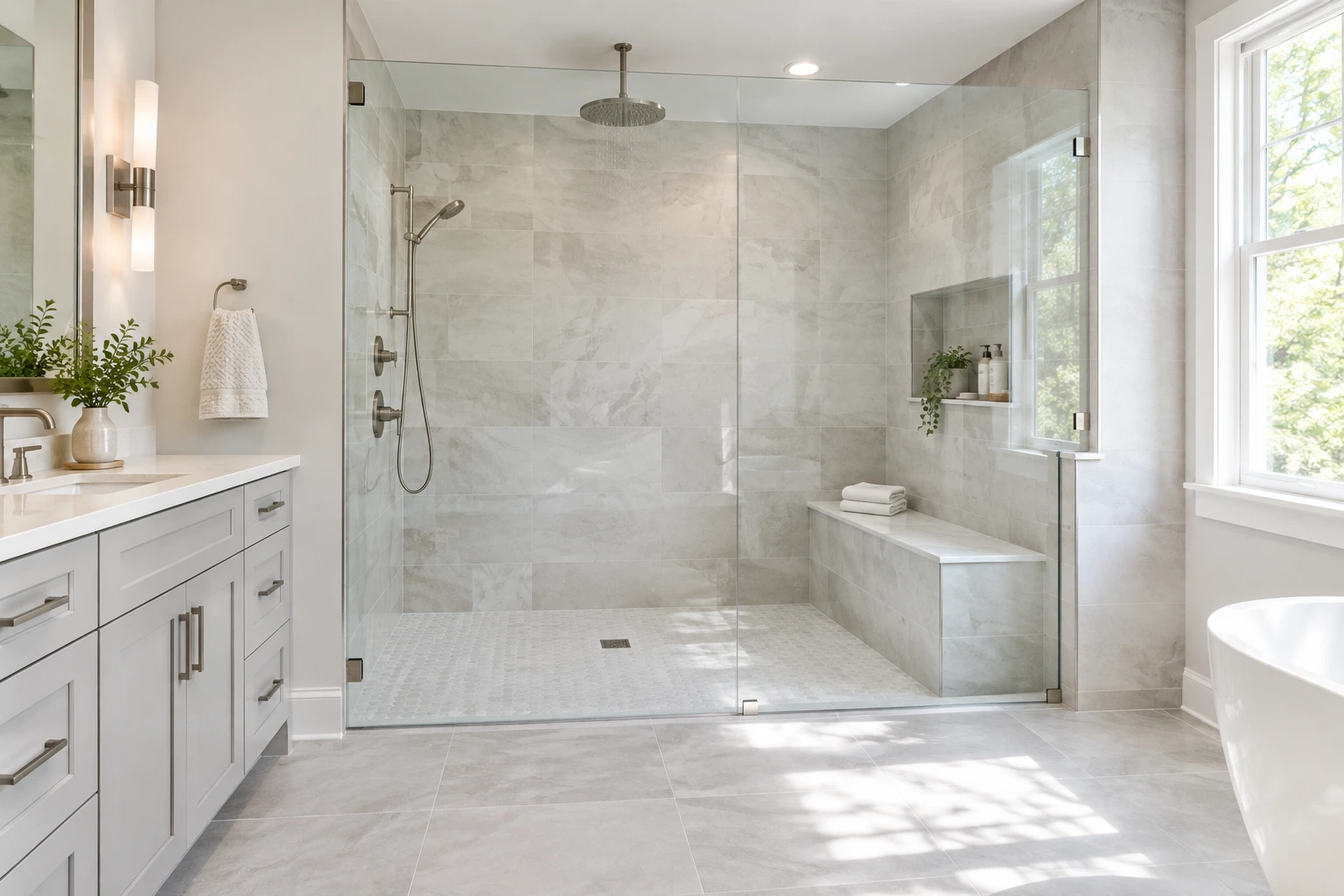
Walk-in showers are a popular feature among homebuyers, and they bring three clear advantages.
Accessibility
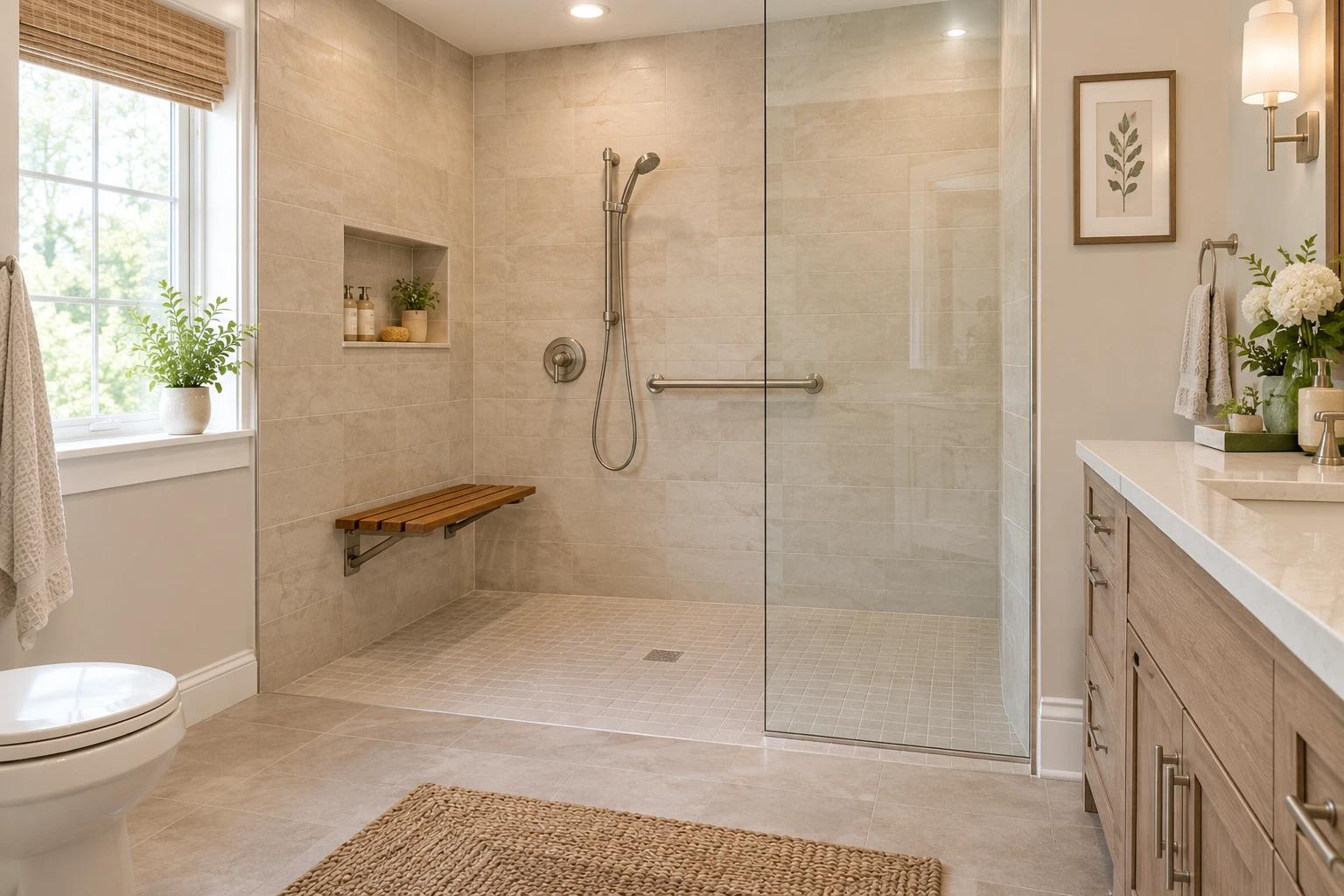
A curbless or low-threshold shower is easy to step into, which matters for anyone with mobility concerns and for homeowners planning to stay in their home as they age. There is no high tub wall to climb over, and the open floor leaves room for a bench or a seat.
The look
A walk-in shower reads as modern and clean. Large tiles, frameless glass, and an open layout make a bathroom feel bigger and more updated, which is exactly the impression that helps at resale.
Practicality
With fewer grout lines and no tub to scrub around, a walk-in shower is easier to keep clean. It tends to fit the footprint of a standard tub, too, so the swap does not always require major layout changes.
In terms of resale value, industry estimates suggest that a mid-range tub-to-shower conversion can recoup around 60% to 74% of its cost, while a well-designed walk-in shower may offer an even higher return.
Those numbers move with the market and the quality of the work, so treat them as a guide rather than a promise. If a walk-in shower is the direction you are leaning, our walk-in shower remodel page covers how we handle them.
What a Bathtub Adds
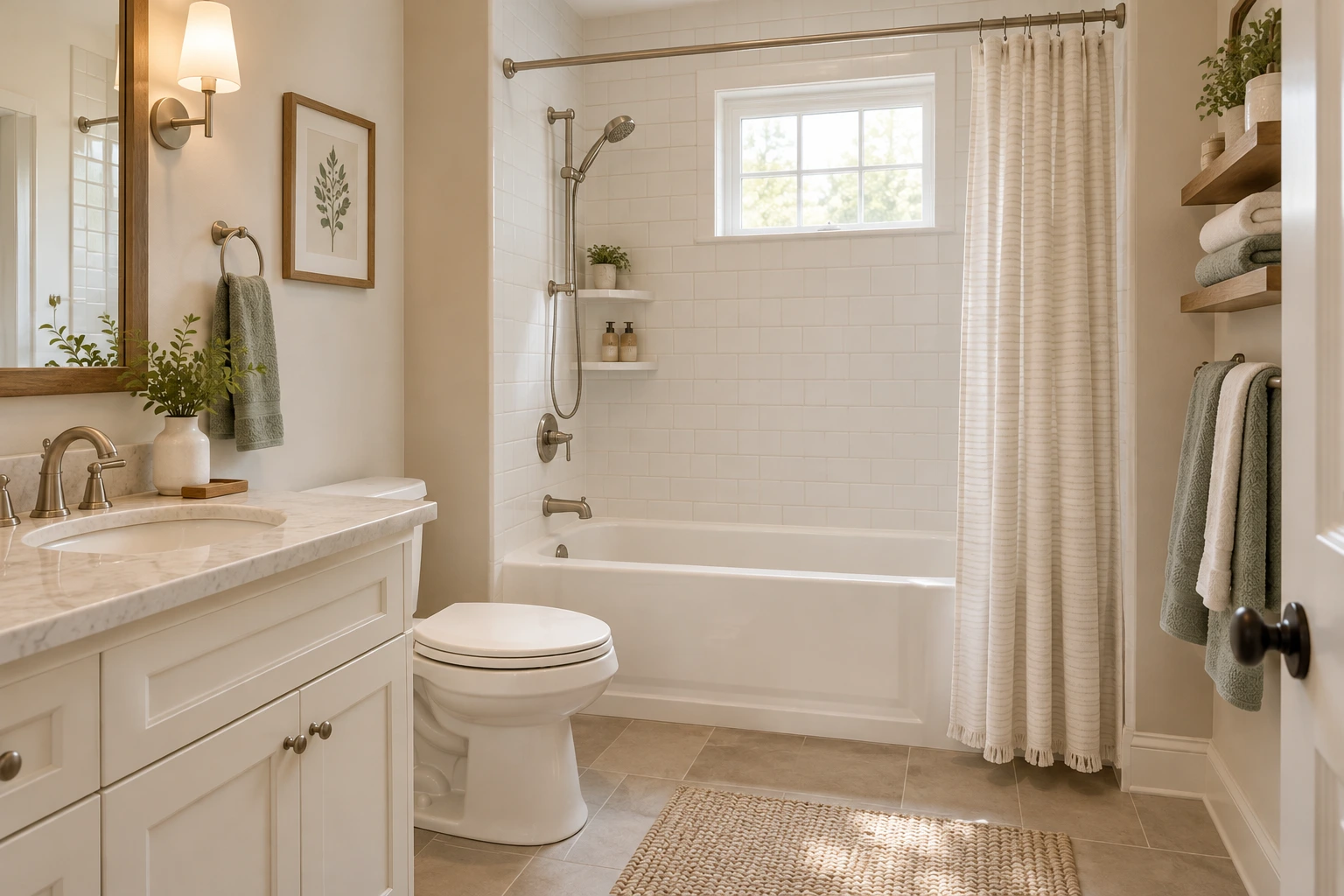
A bathtub earns its place for different reasons, and most of them are related to who uses the home.
Families with young children are the clearest case. Bathing small kids in a shower is awkward, so a tub is close to a requirement for that buyer. The same goes for many pet owners, who find a tub far easier for washing a dog than a shower pan.
There's also a resale safety net to think about. Keeping at least one bathtub in the home can make it appealing to a wider range of buyers, especially families. Industry estimates suggest homeowners may recoup around 60% of their bathtub installation costs, but the real value is harder to put a number on. If you remove the only tub, you may turn off some buyers and make the home harder to sell, particularly in family-oriented neighborhoods.
One more technical point that catches people off guard. A bathroom with only a shower is sometimes counted as a three-quarter bath rather than a full bath, which can affect how a home is listed and valued. That is another reason the last tub in a house is worth protecting.
The One-Tub Rule and Your Home's Layout
This is where the decision actually gets made. Count your bathrooms and look at what is in each one.
If your home has only one full bathroom, the safe choice is to keep a tub there, usually as a tub-shower combination. Removing it leaves the home without a single bathtub, which is the one scenario that reliably costs you buyers.
If your home has two or more full bathrooms and at least one keeps its tub, you have room to move. Converting the primary bathroom to a roomy walk-in shower is often the strongest upgrade you can make, since it gives you the modern shower most buyers now want, and the tub elsewhere covers the families who need one.
The usual sweet spot looks like this. A spa-style walk-in shower in the primary bath, and a tub or tub-shower combo kept in a hall or secondary bathroom. That setup covers nearly every type of buyer, which is exactly what protects value.
Walk-In Shower Conversion and What Is Involved
If your bathroom layout is better suited to a walk-in shower, the project is usually a conversion rather than a complete remodel.
A walk-in shower conversion, also known as a tub-to-shower replacement, is simply the process of removing your existing bathtub and turning that space into a practical, well-built shower.
The work involves bathtub removal, reworking the drain and water lines for a shower, waterproofing the new shower area, and tiling. Waterproofing is the step that matters most and the one that should never be rushed, since a shower that is not sealed correctly leads to water damage behind the walls.
Most conversions fit within the existing bathroom footprint, which keeps the project manageable. The condition of what is behind the walls can affect the timeline, which is worth keeping in mind in older homes.
What This Means in the Hudson Valley
The national rules hold here, but a few local factors tilt the decision in ways a generic guide will not tell you.
Aging in place is a major motivator for Hudson Valley buyers right now. Many are actively looking for homes they can grow old in, and homes set up for that are in short supply. That makes a curbless, accessible walk-in shower genuinely valuable here, not just a style preference. It speaks directly to what a large share of local buyers are searching for.
At the same time, the local market has cooled from its frantic pandemic pace into something more deliberate. Buyers are pickier and take their time, and sellers are putting real work into bathrooms to stand out. In that kind of market, a smart bathroom update earns its keep, but an odd layout such as a home with no tub at all stands out for the wrong reason.
If you live in a neighborhood with a lot of families, keeping at least one tub can still be a smart choice. Many buyers expect to see one in the home. And because many homes in the area are older, removing a tub can sometimes uncover old plumbing or other issues behind the walls. That's why it helps to hire a contractor who has experience working on older homes and knows what to look for.
So, Which Should You Choose?
Before you decide, there are two main things to consider: Are you planning to stay in the home, or are you thinking about selling? And if you remove a tub, will there still be one somewhere else in the house?
If you're staying for the long term
Choose what works best for you. If you enjoy taking baths, keep the tub. If you rarely use it and would get more use out of a large, easy-to-access shower, go with the shower. When you plan to enjoy the bathroom for years, your own comfort matters more than trying to predict what a future buyer might want.
If you're planning to sell soon
It makes sense to think more about resale. Keeping at least one tub in the home gives buyers more options, while putting a walk-in shower in the primary or another bathroom can give you the modern look you want without limiting your potential buyers.
Either way, the goal is a bathroom that works for how you live and holds its value when it is time to sell. For a look at the full range of what we do, see our guide to bathroom remodeling. Over 30 years of experience, licensed, insured, BBB A+ accredited, and NKBA certified.
Frequently Asked Questions
Does a walk-in shower add value to a home?
Yes, especially in a primary or second bathroom, and especially for buyers who want modern style or easier access. The one condition is that your home should keep at least one bathtub elsewhere.
Is it a mistake to remove my only bathtub?
Usually, if resale matters to you. A home with no bathtub tends to appeal to fewer buyers, particularly families with young children, and can sit longer on the market. If you have only one bathroom, keeping a tub-shower combination there is the safer choice.
Which has a better return at resale, a shower or a tub?
Reported figures put a mid-range tub-to-shower conversion around 60 to 74 percent return, and a bathtub installation around 60 percent. The numbers move with the market and the quality of the work, so the layout question matters more than any single figure. The best setup keeps one tub and adds a modern shower.
What is the best bathroom setup for resale in the Hudson Valley?
If resale is on your mind, a good approach is to keep a tub somewhere in the home and use a walk-in shower in the primary bathroom. This gives you the modern, easy-to-use shower many buyers want while still having a tub available for families and anyone who prefers taking a bath.
What does a tub-to-shower conversion involve?
A tub-to-shower conversion usually means removing the old tub, adjusting the plumbing, waterproofing the shower area, and installing the new shower surface. In many cases, the new shower can stay within the existing tub space, which helps keep the project simple.
Ready to Figure Out the Right Choice for Your Bathroom?
At Keen Improvements, we bring over 30 years of experience to bathrooms across the Hudson Valley, and we are licensed, insured, BBB A+ accredited, and NKBA certified. If a shower is the direction you are leaning, our walk-in shower remodel page covers how we handle them, and our bathroom remodeling page shows the full range of what we do.
We remodel bathrooms across Westchester, Putnam, Ulster, Dutchess, and Orange counties. Ready to talk? Contact us for a free estimate.
Get Your Free Estimate
Mt. Kisco
118 N Bedford Rd #100, Mt Kisco, NY 10549
(914) 410-6209
(914) 410-6209
Marlboro
63 South St, Marlboro, NY 12542
(845) 440-1010
(845) 440-1010